What Is Involuntary Churn?
Involuntary churn is subscription cancellation that happens without the customer's intent. The customer didn't decide to leave — their payment failed, wasn't recovered in time, and their subscription was cancelled automatically. They may not even know it happened until they try to log in and find their account suspended.
This is distinct from voluntary churn, where a customer actively cancels because they're unhappy, found a better alternative, or no longer need the product. Involuntary churn is a billing and operations problem, not a product problem. It's caused by the messy reality of how credit cards and bank payments work — and it's largely preventable.
Other terms you'll encounter for the same concept: delinquent churn (used by Stripe and Chargebee in their dashboards), failed payment churn, and passive churn. All describe the same phenomenon: a subscription ending due to payment failure rather than customer decision.
Involuntary vs. Voluntary Churn: Why the Distinction Matters
Treating all churn as the same problem leads to the wrong solutions. Voluntary churn is a product and value problem — you fix it by improving your product, your onboarding, your customer success, or your pricing. Involuntary churn is a payments and communication problem — you fix it with dunning software, smart retries, and recovery email sequences.
The two types have fundamentally different customer psychology:
- Voluntary churners have made a conscious decision. Re-engaging them requires addressing their objection, offering an incentive, or showing them new value.
- Involuntary churners don't want to leave. They're confused and often frustrated. Re-engaging them requires clarity (explaining what happened) and friction removal (making it easy to fix). The win rate on involuntary churn recovery is dramatically higher than voluntary churn winback.
Research from Baremetrics shows that 20–40% of all SaaS churn is involuntary, depending on business model and customer profile. For consumer-facing SaaS with many individual subscribers, that number skews higher. For enterprise B2B with annual contracts and ACH/wire payments, it's lower. But for most subscription businesses, a meaningful portion of every month's churn is recoverable.
How Much Is Involuntary Churn Costing You?
Run this math on your own numbers:
- Take your current MRR
- Multiply by 0.09 (9% industry average for failed payments)
- That's your estimated monthly payment failure exposure
- Multiply by your estimated recovery rate (assume 20% if you have no dunning, 65% if you have a good dunning tool)
- The difference between those two recovery rates, annualized, is your opportunity
At $50K MRR: 9% failing = $4,500/mo in payment failures. At 20% recovery (no dunning), you're recovering $900/mo. At 65% recovery (good dunning tool), you'd recover $2,925/mo. The gap: $2,025/mo, or $24,300/year — from payments that already exist in your customer base.
At $200K MRR: that same gap becomes $8,100/mo or $97,200/year. No growth tactic. No new customer acquisition. Pure recovery of revenue that was already yours.
According to ChartMogul's SaaS Benchmarks Report, the median net revenue churn for SaaS companies is around 1% per month. Involuntary churn alone — if unmanaged — can account for the majority of that figure. Fixing it is one of the highest-leverage, lowest-effort retention levers available to any subscription business.

Involuntary churn is a silent drain on MRR — it shows up in your numbers but the cause is often misidentified as product dissatisfaction.
The Root Causes of Involuntary Churn
Payment failures that drive involuntary churn fall into four primary buckets, each requiring a different response:
1. Expired Credit Cards
The single most common cause of failed subscription payments. Cards expire every 2–4 years, and many customers don't proactively update their card on every subscription when they receive a new one. Banks sometimes issue new cards with updated expiry but the same number (account updater programs) — but this doesn't always work, particularly for smaller banks or international cards. The fix: send proactive pre-expiry emails 30–60 days before a card expires, and send targeted "your card expired" emails immediately when a charge fails for this reason.
2. Insufficient Funds
A temporary shortfall in the customer's account at the time of the charge. This is often a timing issue — their paycheck clears the next day, or a large purchase depleted their account temporarily. Most insufficient funds failures resolve on their own within 2–5 days. Smart retry logic — that waits 3–4 days before retrying — recovers a significant portion of these automatically. The dunning email for this scenario should reassure, not alarm: "Nothing is wrong with your account, your card, or your subscription. We'll retry the charge automatically."
3. Bank Declines (Do Not Honor)
Generic bank declines, often coded as "do not honor" in Stripe's decline codes, are the catch-all for a variety of bank-side risk decisions. These include: unfamiliar merchant (a new SaaS subscription the bank hasn't seen before), international transaction flags, spending pattern anomalies, or generic fraud prevention blocks. The customer's card is fine; the bank is blocking the specific transaction. Recovery requires the customer to contact their bank and authorize the charge. Dunning emails for this scenario need to explain exactly what the customer needs to say when they call.
4. Fraud Flags and Disputed Transactions
Some payment failures are triggered by the card network's fraud detection algorithms — not because the customer flagged the charge, but because an automated system flagged it. Recovery is similar to bank declines: the customer needs to contact their bank and whitelist the charge, or provide an alternative payment method. Clear, calm communication from you is critical here — the customer may be alarmed to hear their card was "flagged for fraud" and needs reassurance that this is a bank-side technical issue.
How to Measure Your Involuntary Churn Rate
To calculate your involuntary churn rate:
- Pull failed payment data from Stripe (or your processor) for the period — the total MRR value of subscriptions that failed to renew due to payment failure
- Subtract recovered payments — the MRR value of failed payments that were subsequently recovered through retries or dunning
- Divide by starting MRR for the period
- Multiply by 100 to get percentage
Formula: Involuntary Churn Rate = (Failed Payment MRR − Recovered MRR) ÷ Starting MRR × 100
Stripe's dashboard surfaces "MRR lost to churn" but doesn't always separate voluntary from involuntary. A dedicated dunning tool will provide a cleaner breakdown: total failed, recovered, and net lost — giving you the data to actually track your involuntary churn rate over time and measure the impact of your recovery efforts.
7 Strategies to Reduce Involuntary Churn
1 Implement Failure-Reason-Specific Dunning Emails
Stop sending the same "please update your card" email to every customer with a failed payment. Classify why each payment failed and send an email written specifically for that scenario. An expired card email is completely different from an insufficient funds email. Tools like DunningBee automate this classification and AI-generate the right email for each failure type.
2 Enable Smart Payment Retries
Don't retry failed payments immediately and repeatedly — that can get your merchant account flagged. Use ML-optimized retry logic that analyzes decline codes and historical patterns to time retries when they're most likely to succeed. Stripe's Smart Retries are a decent baseline; dedicated dunning tools layer additional intelligence on top.
3 Send Pre-Expiry Emails Before Cards Expire
Proactive communication before a card expires prevents failures from happening at all. Email customers 30 and 14 days before their card on file expires. Include a direct link to update payment details — no login required. This is the highest-leverage preventive action for reducing expired card failures, which are the most common cause of involuntary churn.
4 Enable Account Updater Programs
Visa and Mastercard both offer Account Updater programs that automatically update expired or replaced card details before a charge is attempted. Stripe has this built in. Enable it in your Stripe settings if you haven't already — it silently prevents a portion of expired card failures without any customer interaction required.
5 Create Frictionless Card Update Flows
Every second of friction in the card update process reduces recovery rates. Your dunning email should link directly to a payment update page — no login, no navigation, one click to a pre-populated update form. Stripe's hosted invoice pages can handle this; dunning tools provide their own branded versions. Mobile optimization is mandatory — many customers will open dunning emails on their phones.
6 Add a Payment Method During Checkout (the "Backup Card" Strategy)
Some SaaS products ask customers to add a backup payment method at signup — a secondary card to charge if the primary fails. This is common in enterprise billing. For consumer SaaS, the implementation is trickier (most users resist adding two cards), but even offering it as an option during the dunning recovery flow ("add a backup card to prevent this in the future") can improve long-term resilience.
7 Offer Multiple Payment Methods
ACH bank transfers, PayPal, and digital wallets (Apple Pay, Google Pay) have significantly lower failure rates than credit cards. Offering payment method diversity — especially for higher-value subscriptions — reduces the probability of failure. ACH failure rates are typically 2–4% vs. 5–15% for credit cards, and annual plans paid via ACH avoid the monthly expiry cycle entirely.
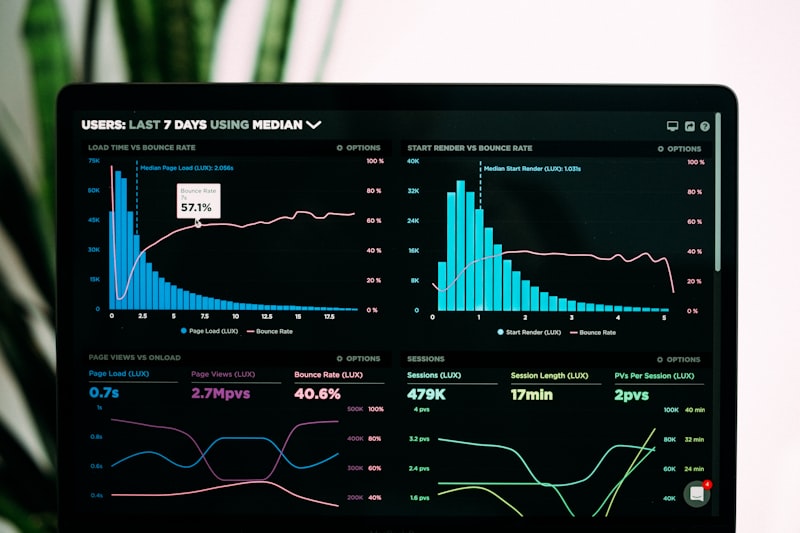
Tracking your involuntary churn rate separately from voluntary churn is the first step — you can't improve what you don't measure.
How Dunning Software Automates Recovery
Manual dunning — someone on your team monitoring failed payments and sending individual recovery emails — doesn't scale. Dunning software automates the entire recovery loop:
- Payment fails → Stripe (or your processor) sends a webhook to the dunning tool
- Dunning tool classifies the failure → expired card vs. insufficient funds vs. bank decline vs. fraud block
- Recovery sequence launches → an AI-written email specific to that failure type fires within 1–2 hours
- Smart retry scheduled → optimal retry timing calculated based on failure type and historical data
- Follow-up emails sent → escalating sequence over 7–21 days, adjusting messaging based on customer actions (opened email, clicked link, updated card)
- Recovery tracked → dashboard shows total failed, recovered, and net revenue saved
The difference between tools lies in steps 2 and 3 — the quality of failure classification and the intelligence of the email that gets sent. A generic dunning tool sends the same template to every failed payment. An AI-powered dunning tool like DunningBee classifies every failure and sends a completely different email for each scenario. That's what drives the gap between 20% and 67% recovery rates.
For a full comparison of dunning tools and their approaches, see our best dunning software 2026 comparison.
Should You Pause or Cancel Subscriptions When a Payment Fails?
Best practice: pause, don't cancel.
When you cancel a subscription on payment failure, the customer has to go through a full re-subscription flow — re-entering payment details, potentially being re-shown pricing, and losing their previous plan settings. This creates friction and dramatically reduces reactivation rates.
When you pause a subscription, the record stays intact. When the customer updates their payment, you simply unpause the subscription and their billing continues seamlessly. The customer experience is: "My account was temporarily suspended, I updated my card, and everything is back to normal."
There's a secondary question: do you maintain access to the product during the dunning window, or restrict it immediately? Maintaining access during the recovery window (typically 7–14 days) reduces urgency-driven cancellations — customers who can still use the product are more likely to fix the payment issue at their convenience rather than feeling forced and resentful. Restricting access creates urgency that can accelerate recovery but also drives frustration. Most dunning tools let you configure this behavior for your use case.
Stop losing revenue to failed payments
DunningBee classifies every failed payment by type — expired card, insufficient funds, bank decline, fraud block — and sends AI-written emails matched to each scenario. Setup takes 2 minutes via Stripe OAuth. 14-day free trial, no credit card required.
Try DunningBee Free →Related Resources
- DunningBee — AI-powered failed payment recovery The top-rated dunning tool in our comparison.
- Growth systems for subscription businesses Reduce churn beyond just payment recovery.
Frequently Asked Questions
Related reading: What is dunning? · Best dunning software 2026 · DunningBee review